

Surface Cleaning and Chemical Selection for Stainless Steel Equipment
- Blog
- Surface Cleaning and Chemical Selection for Stainless Steel Equipment
Surface Cleaning and Chemical Selection for Stainless Steel Equipment
Table of Contents
- Why Protecting the Stainless Surface Matters
- Types of Soil: Oil, Protein, Calcium and Iron
- The Difference Between Mechanical and Chemical Cleaning
- Criteria for Selecting a Cleaning Chemical
- Precautions When Using Chloride and Acids
- Rinsing and Drying Steps
- Setting the Cleaning Frequency
- Surface Inspection and Protecting the Passive Layer
- Cleaning Records and Procedure
- Conclusion
Stainless steel is widely used in food, pharmaceutical and chemical plants because of its corrosion resistance. That resistance depends on keeping the surface clean. Soil left on the surface creates an environment in which corrosion can start, and an unsuitable chemical can damage the surface itself.
Why Protecting the Stainless Surface Matters
The protective surface of stainless steel is a passive oxide layer containing chromium. This layer can repair itself, but soil and foreign matter on the surface can prevent it from forming. Cleaning is therefore an integral part of corrosion control.
Irregular cleaning can lead to localised corrosion that develops before any early sign is visible. This is especially noticeable at weld seams and in dead zones.
Types of Soil: Oil, Protein, Calcium and Iron
The type of soil on the surface determines the cleaning method. Oil and oily residues are usually removed with alkaline cleaners. Residues containing protein are cleaned more effectively with hot alkaline solutions. Calcium and mineral deposits may need acidic cleaners.
Iron particles that settle on the surface can cause discolouration and the start of corrosion if cleaned incorrectly. For this type of soil, the choice of chemical should match the recommendations of the material supplier.
The Difference Between Mechanical and Chemical Cleaning
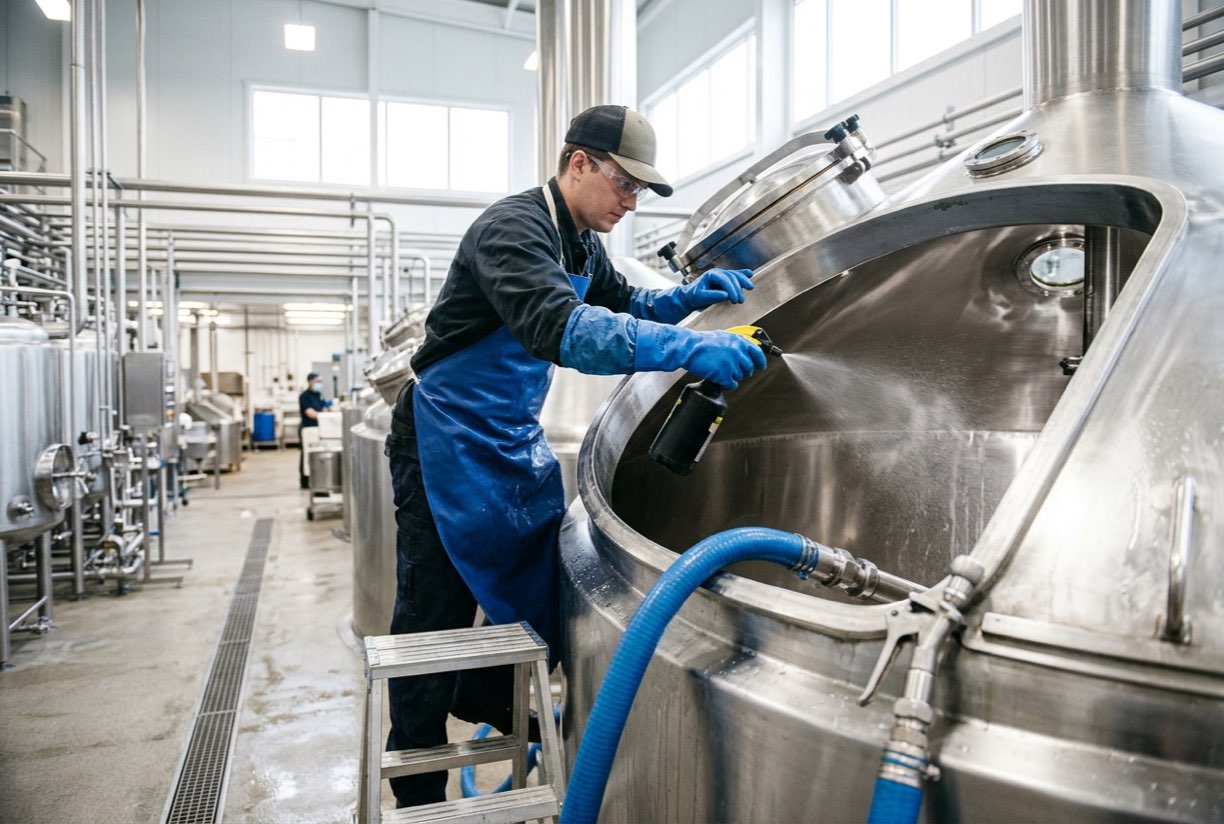
Mechanical cleaning uses brushes, pads or high-pressure water. It suits removing coarse soil without damaging the surface. It may, however, be insufficient for sticky or layered residues.
Chemical cleaning removes residue by dissolving or loosening it. When applied at the right concentration, temperature and time, it gives a more uniform result than mechanical methods. Both methods should be matched to the surface material.
Criteria for Selecting a Cleaning Chemical
The chemical should be selected according to the type of soil, the surface material, the contact with the process and environmental requirements. The manufacturer's data sheet, instructions for use and compatibility information must be reviewed.
Concentration and temperature limits must not be exceeded. A stronger chemical does not always give a better result; it can damage the surface roughness and the passive layer.
Precautions When Using Chloride and Acids
Chloride-containing solutions can increase the risk of pitting corrosion and stress corrosion cracking in stainless steel. The use of chloride-containing products should therefore be assessed against the material grade and the temperature conditions.
Similar care is needed with acids. An acid solution should be removed without leaving residue and rinsed thoroughly after use. Safety rules and the use of protective equipment apply at every stage of the work.
Rinsing and Drying Steps
If the cleaning chemical is not fully removed from the surface, the residue can become a source of contamination and corrosion in later use. The quality of the rinse water and the rinsing time should be defined in the procedure.
Drying should be carried out before water marks and residue form. Air drying or controlled flow helps keep the surface clean.
Setting the Cleaning Frequency
The cleaning frequency should be set according to the nature of the product, the length of the process and the quality expectations of the plant. A plan supported by visual inspection and quality data is more effective than a fixed interval.
On lines where the product changes, the frequency should be increased to account for the risk of cross-contamination between products.
Surface Inspection and Protecting the Passive Layer
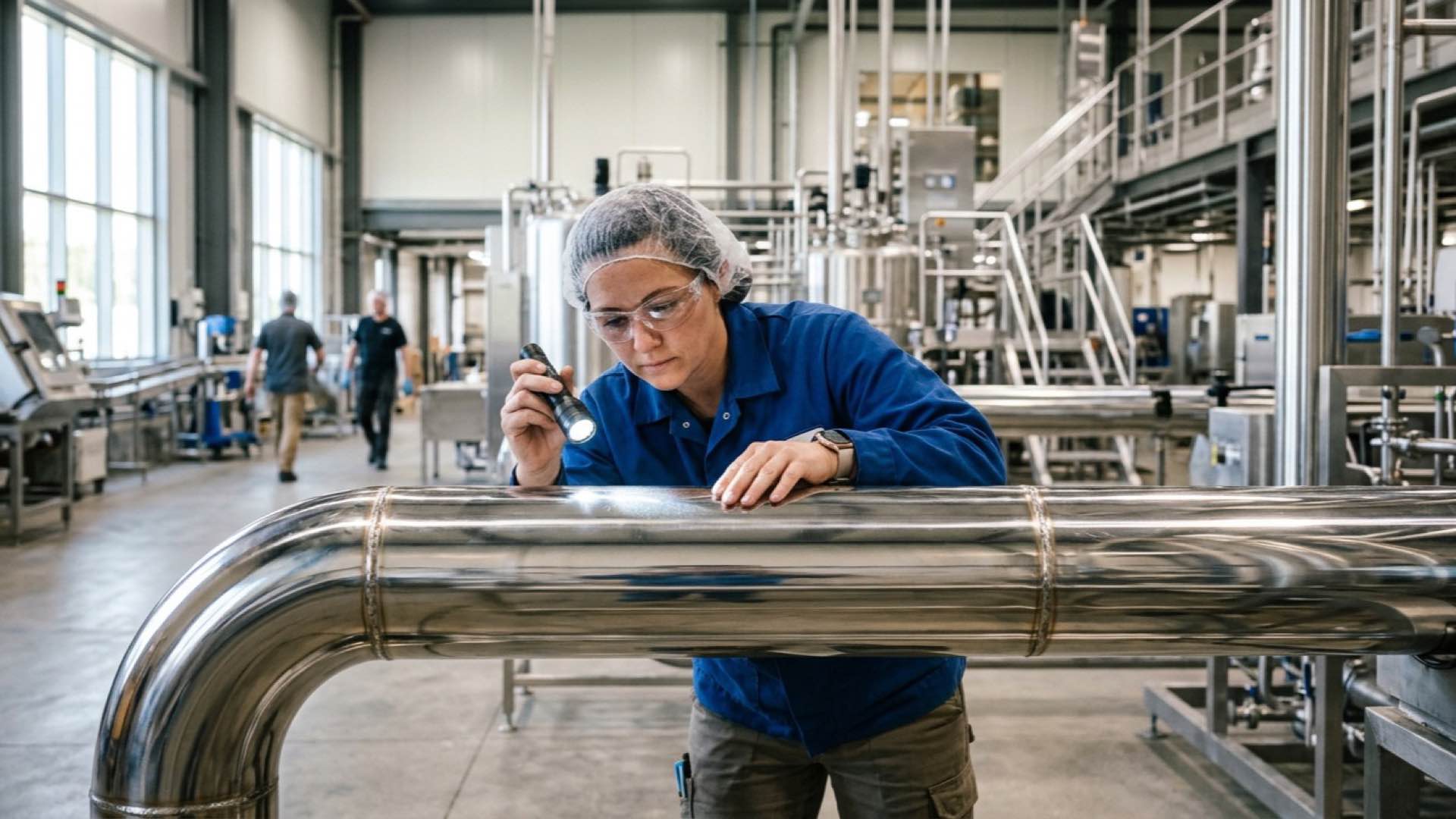
After cleaning, the surface should be inspected visually for discolouration, staining and residue. Where needed, the condition of the passive layer should be confirmed with suitable tests.
Mechanical abrasion of the surface can reduce the passive layer. After grinding or brushing, the surface may need to be passivated again.
Cleaning Records and Procedure
Each cleaning operation should be recorded with its date, the chemical used, the concentration, temperature, time, rinsing and the result. These records are among the most important sources when a fault has to be traced back to its cause.
The procedure should be written to suit the actual practice on site and be known to the whole team. When the procedure changes, the old and new practice should be clearly separated.
Conclusion
Surface cleaning of stainless steel equipment is maintained through correct soil analysis, the right choice of mechanical and chemical methods, careful rinsing and regular inspection. When the chemical is selected to suit the material and process conditions, the corrosion resistance of the surface is preserved for a long time.
SS Proje supports quality control in stainless steel fabrication and surface treatment. Cleaning chemicals and parameters should be set for each application using the manufacturer's data and the judgement of a qualified engineer.