

What Is Microbiologically Influenced Corrosion (MIC)? Prevention in Stainless Steel Systems
- Blog
- What Is Microbiologically Influenced Corrosion (MIC)? Prevention in Stainless Steel Systems
What Is Microbiologically Influenced Corrosion (MIC)? Prevention in Stainless Steel Systems
Table of Contents
- What is Microbiologically Influenced Corrosion (MIC)?
- How Does Biofilm Form?
- Which Factors Increase MIC Risk?
- Why the Post-Hydrotest Phase is Critical
- How to Detect MIC
- Prevention Strategies: Design
- Prevention Strategies: Installation and Commissioning
- Prevention Strategies: Operation
- What to Do If MIC Is Detected
- Frequently Asked Questions
- Conclusion
Stainless steel is renowned for its exceptional resistance to corrosion. However, this resistance is not absolute under all operating conditions. In certain industrial scenarios, stainless steel piping and process vessels—particularly near weld zones—can experience unexpectedly rapid localized pitting corrosion. The underlying driver of this attack is frequently microbial activity. This phenomenon is known as microbiologically influenced corrosion, or MIC. This article examines how MIC develops, the environmental parameters that accelerate it, and proven engineering strategies to prevent its occurrence.
What is Microbiologically Influenced Corrosion (MIC)?
Microbiologically influenced corrosion is initiated or accelerated by the metabolic activities of microorganisms adhering to metal surfaces. Microbes do not directly consume or ingest the metallic substrate; rather, they construct a protective biofilm layer that alters local surface chemistry. Differential oxygen concentration cells, acidic metabolic byproducts, and specific chemical compounds generated by bacteria break down the protective passive oxide layer of stainless steel, triggering localized pitting attack.
How Does Biofilm Form?
A biofilm is a sticky, structured matrix synthesized by microorganisms to attach themselves securely to a substrate. Stagnant or low-velocity fluids provide the ideal environment for initial attachment and rapid biofilm development. Surface roughness, weld defects, and dead legs offer ideal attachment sites for microbial colonies. Once established, the biofilm insulates the underlying metal surface from the bulk fluid, cultivating corrosive micro-environments beneath it.
Which Factors Increase MIC Risk?
- Stagnant Water: Extended offline periods, dead legs, and incomplete system drainage.
- Retained Hydrotest Water: Leaving water inside the pipeline following hydrostatic pressure testing is one of the most common causes of MIC.
- Poor Water Quality for Testing: Utilizing water with high chloride concentrations or high initial microbial counts.
- Weld Zone Imperfections: Unremoved heat tint, lack of penetration, and rough weld beads.
- Ambient Temperatures: Warm liquid temperatures that support rapid microbial growth.
- Inadequate Cleaning and Sanitization: Operational protocols that allow biofilms to accumulate on inner pipe walls.
Why the Post-Hydrotest Phase is Critical
Allowing hydrotest water to remain inside newly installed piping for weeks or months is a frequent field mistake. When project commissioning is delayed, trapped water becomes stagnant, fostering rapid microbial growth. Consequently, severe pitting corrosion can initiate along weld seams before the plant processes a single drop of product. Preventing this requires using high-quality hydrotest water, followed by immediate drainage and complete drying. Complete water removal requires designing piping networks with sufficient slope for full gravity drainage.
How to Detect MIC
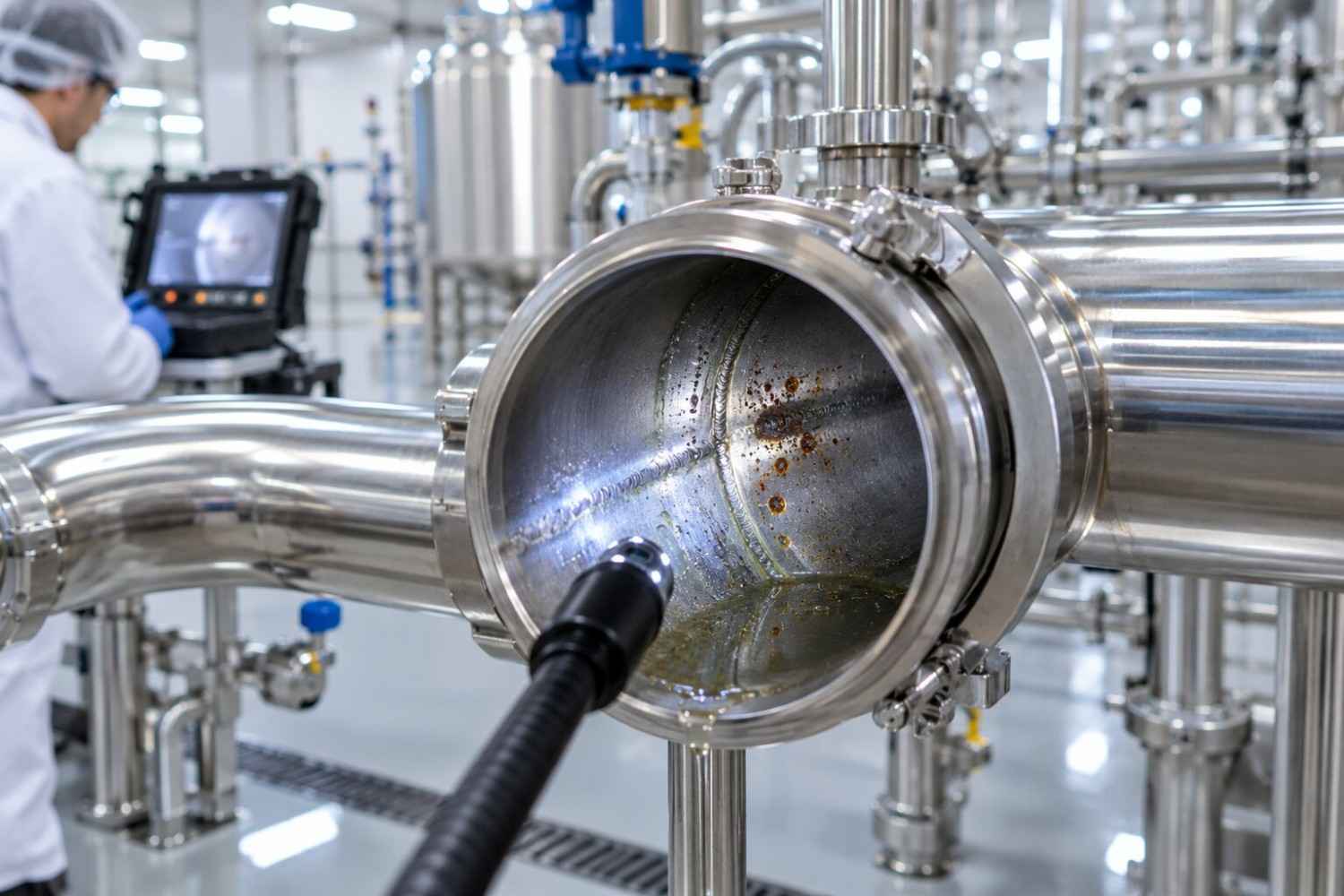
MIC typically manifests along weld seams or heat-affected zones (HAZ) as narrow surface pits that expand into larger subterranean cavities beneath the metal surface. On external surfaces, a tiny pinhole leak or small rust stain may be the only visible indicator of severe internal degradation. Borescope inspections allow engineers to visually identify internal tuberculation, deposits, and pitting. Definitive confirmation requires microbiological testing of scraped deposit samples alongside metallurgical analysis of the affected section.
Detecting early-stage MIC is challenging because internal wall loss cannot be seen from the outside. For newly installed systems—especially those left un-drained for extended periods following hydrotests—re-inspecting representative weld joints with a borescope prior to startup is a recommended quality control practice. Early detection allows remediation before active production begins.
Prevention Strategies: Design
The most effective strategy against MIC is eliminating stagnant liquid pockets and microbial attachment points during initial design. Key preventative measures include ensuring complete drainability across all lines, enforcing strict dead-leg limits, specifying smooth surface finishes, and executing high-quality welds using automatic orbital TIG welding to minimize heat tint and surface roughness.
Prevention Strategies: Installation and Commissioning
Safeguards applied during site installation and commissioning are just as vital as sound design. Hydrotesting must use low-chloride, microbially controlled water, followed immediately by thorough draining and force-air drying. Cleaning post-weld surfaces and performing full-system passivation reinforces the protective chromium oxide layer. If commissioning is postponed, pipelines must be kept completely dry or preserved under a nitrogen purge.
Prevention Strategies: Operation
During routine plant operation, maintaining continuous fluid velocities, adhering to verified cleaning cycles, and executing sanitization protocols minimize MIC risks. Idle utility lines should be drained or flushed periodically. In process water circuits, rising microbial counts serve as an early warning indicator of biofilm development and should trigger prompt corrective action.
What to Do If MIC Is Detected
When MIC is identified, the first step is mapping the full extent of internal damage. Typical corrective actions include cutting out and replacing compromised welds and pipe segments, physically removing biofilm buildup, disinfecting the system, and performing re-passivation. However, unless the underlying root cause is addressed, the issue will recur. Engineers must audit dead legs, low-point drainage issues, hydrotest protocols, and operational flushing regimens.
Analyzing the spatial distribution of the damage provides valuable clues during root cause analysis. If corrosion pits are concentrated strictly at low points and poorly drained sections, stagnant water is the primary culprit. If attacks are isolated to specific welder IDs or a single installation phase, weld joint quality or purging gas integrity should be audited. This systematic assessment ensures corrective measures target the true source of failure.
Frequently Asked Questions
Is 316L stainless steel immune to MIC?
No. While 316L stainless steel offers strong general corrosion resistance across many environments, it remains susceptible to MIC under stagnant conditions, un-passivated welds, or biofilm accumulation. Proper design, installation, and operating practices are as critical as alloy selection.
Can pneumatic testing replace hydrostatic testing?
In specific applications, yes. However, pneumatic pressure testing introduces significant stored-energy safety risks and is subject to strict regulatory constraints. Test selection depends on pipe diameter, pressure ratings, applicable codes, and comprehensive safety evaluations.
How fast can MIC develop?
Under favorable microbiological conditions, MIC can initiate within days and cause pipe wall penetration in a matter of weeks. Protecting uncommissioned, wet systems during idle project phases is critical.
Microbiologically influenced corrosion represents a significant operational risk for stainless steel process lines. Ensuring fully drainable layouts, high-integrity orbital welding, controlled hydrotesting, thorough passivation, and consistent sanitation effectively prevents MIC. To safeguard your water systems and hygienic process piping against corrosion risks, contact our engineering team.