



Tracking Filter Bag Life: Replacement Decisions Based on Pressure Drop
- Blog
- Tracking Filter Bag Life: Replacement Decisions Based on Pressure Drop
Tracking Filter Bag Life: Replacement Decisions Based on Pressure Drop
Table of Contents
- How Filter Bags Work
- What the Pressure Drop Tells You
- Limits of a Fixed-Interval Replacement
- Recording the Initial Pressure Drop
- Trend Tracking and Threshold Values
- Assessing Together with Process Data
- Safety During Bag Replacement
- Inspecting the Used Bag
- Data Records and Reporting
- Conclusion
Filter bags retain solid matter in air or gas streams that carry dust and particles. As the bags load up, resistance to flow increases. When the bags should be replaced affects both filtration efficiency and energy use directly.
How Filter Bags Work
A bag filter works on the principle that the fabric retains particles on its surface or within the fibres as the gas passes through. The retained layer thickens over time and the resistance to flow rises. This increase is normal, but performance falls once a limit is exceeded.
The bag material, weave structure and coating are chosen according to the type of dust being collected. This choice also influences the replacement interval.
What the Pressure Drop Tells You
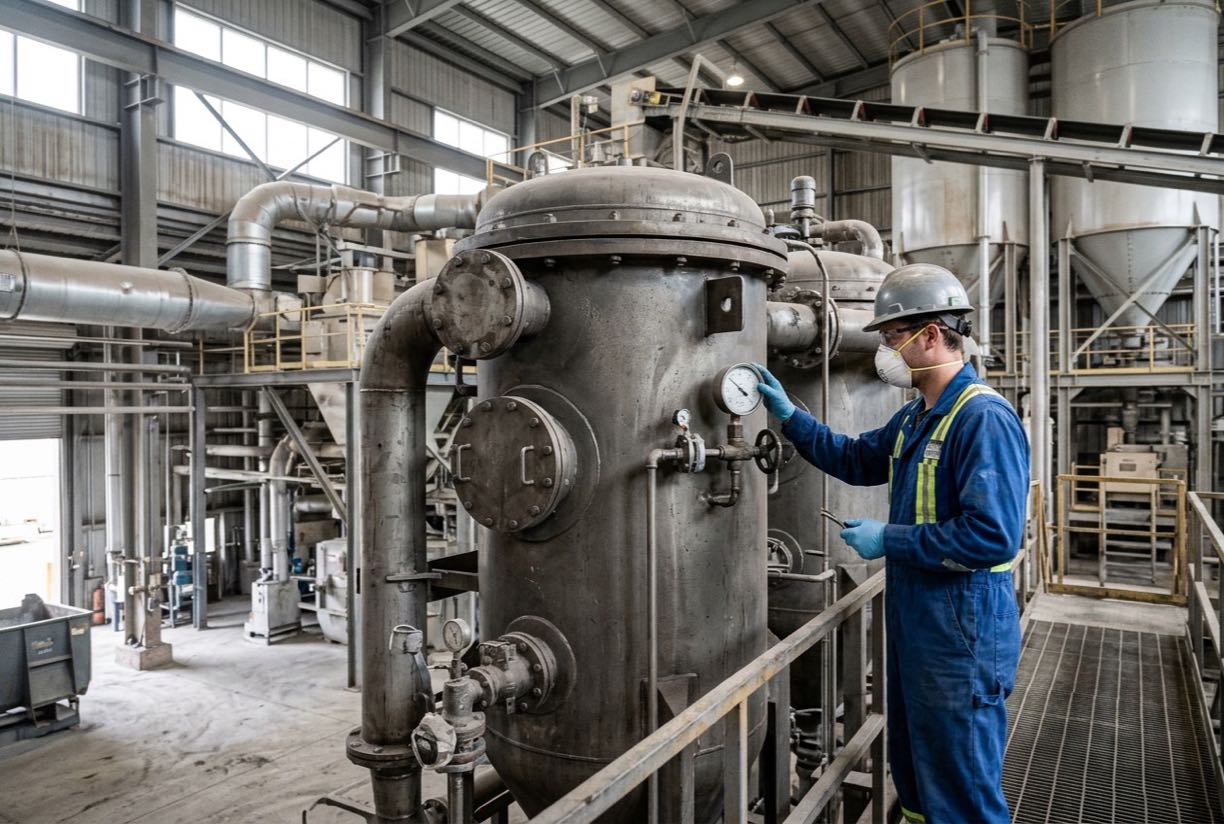
The pressure difference across the filter, between inlet and outlet, is the most practical indication of how loaded the filter is. A clean bag shows a low difference, and the value rises as the bag loads. This change is used to monitor the overall condition of the system.
The pressure drop is not a decision tool on its own. It should be read together with variables such as flow rate and temperature, otherwise the reading may be misinterpreted.
Limits of a Fixed-Interval Replacement
Replacing bags at a fixed interval is simple, but the dust load is not the same at every plant. When the dust load, production hours and process variables differ, a fixed interval can lead to replacement that is either too early or too late.
A fixed interval can therefore be used as a starting point, but the actual decision should rest on measured data.
Recording the Initial Pressure Drop
When a new bag is fitted, the clean pressure drop at that moment should be recorded. This value is the reference point for the later loading curve. An initial reading taken at different flow or temperature conditions makes the comparison meaningless.
The initial value should be assessed against the bag manufacturer's data and the design values of the system.
Trend Tracking and Threshold Values
When the pressure drop is recorded at regular intervals, it forms a curve. The slope of that curve shows how quickly the bag is loading. Replacement is planned when a threshold value set on the curve is reached.
The threshold should be set through an engineering assessment, taking into account the design limits, fan capacity and production requirements. No numerical threshold is given in this article.
Assessing Together with Process Data
An increase in pressure drop may sometimes come from a rise in flow or a change in temperature rather than from bag loading. For this reason the replacement decision should be made together with the process data.
When the product type changes, the dust characteristics can change too. The curve should be followed again for the new dust, and old threshold values should not be applied without thought.
Safety During Bag Replacement
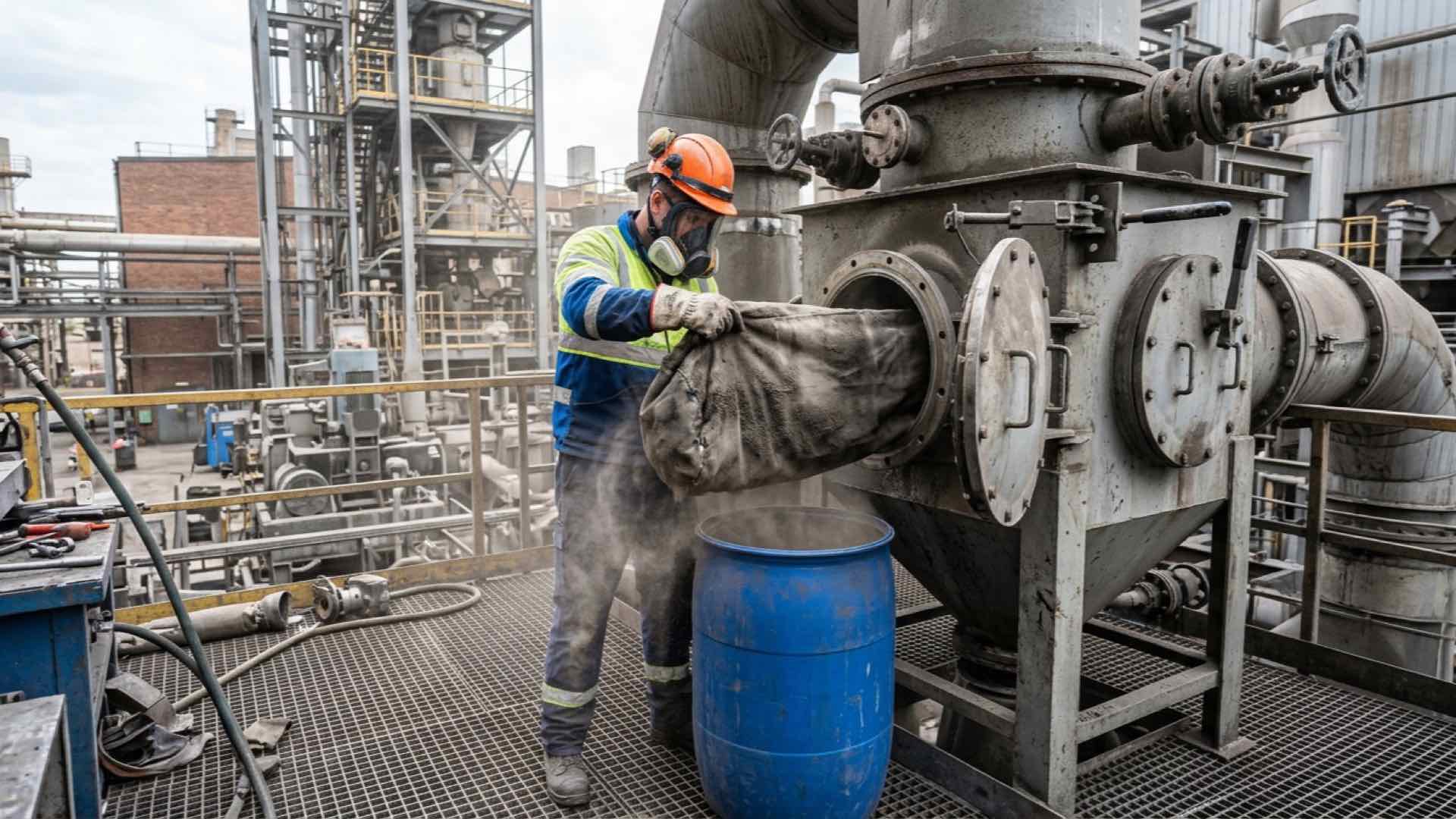
Replacing bags carries a risk of dust exposure. Before replacement the filter should be isolated, the pressure relieved and, where needed, the dust release controlled. Suitable protective equipment must be used.
In confined areas and systems handling combustible dust, the replacement should be planned according to ATEX rules and the work procedure. The risk of static electricity should also be considered during the work.
Inspecting the Used Bag
Examining a removed bag gives useful information about the state of the system. Tears, punctures, heavy blinding or localised contamination in the bag can point to problems with flow distribution or connections.
The inspection results should be recorded. Repeated damage may call for a review of the replacement interval or the choice of bag.
Data Records and Reporting
Each replacement should be recorded with its date, the pressure drop before and after, the process conditions, the bag type and the inspection result. Over time these records build up and show the real life of the bag.
The records form the basis of the maintenance plan and of future bag selection.
Conclusion
Bag life tracking in filter bags is done through regular measurement of the pressure drop, trend analysis, assessment alongside process data and record keeping. When the replacement decision rests on measured data rather than a fixed period, both filtration efficiency and operating cost are managed better.
SS Proje supports the selection of filter bags and the maintenance planning of filtration equipment. Threshold values and replacement criteria should be set for each application using process data and the judgement of a qualified engineer.