


Surface Checks After Passivation: Which Tests Are Applied?
- Blog
- Surface Checks After Passivation: Which Tests Are Applied?
Surface Checks After Passivation: Which Tests Are Applied?
Table of Contents
- The Purpose of Post-Passivation Inspection
- Starting with Visual Inspection
- The Ferroxyl Test
- The Copper Sulphate Test
- Humidity, Condensation and Corrosion Tests
- Roughness and Surface Measurement
- Test Selection and Compliance with Standards
- Rinsing and Drying After Testing
- Records and Reporting
- Conclusion
Passivation removes free iron and contamination from a stainless steel surface and strengthens the protective oxide layer. The effect of the treatment is confirmed by checking the surface afterwards. This article describes the inspection methods commonly used after passivation and how to choose between them.
The Purpose of Post-Passivation Inspection
The purpose of inspection is to show that passivation has actually taken place on the surface and that no free iron residue remains. A single test may not always be enough, so several methods can be considered together.
The scope of inspection should be set according to the material, the application and the project specification. Every surface does not have to undergo the same set of tests.
Starting with Visual Inspection
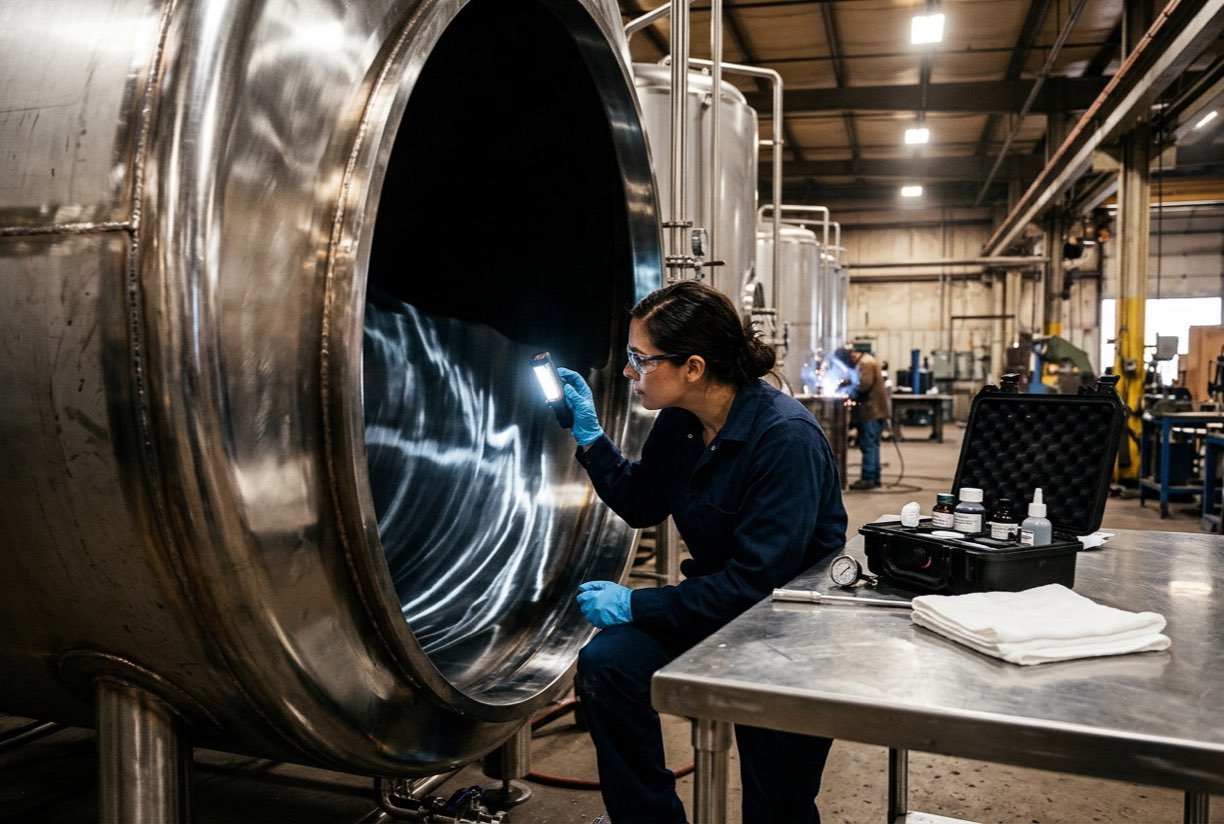
Every inspection should begin with a visual examination of the surface. Defects such as discolouration, staining, signs of rust, residue and scratches are identified at this stage. Visual inspection helps decide whether the more expensive tests will be needed.
Inspection should be carried out under suitable lighting and when the surface is completely dry. Weld seams and dead zones deserve particular attention.
The Ferroxyl Test
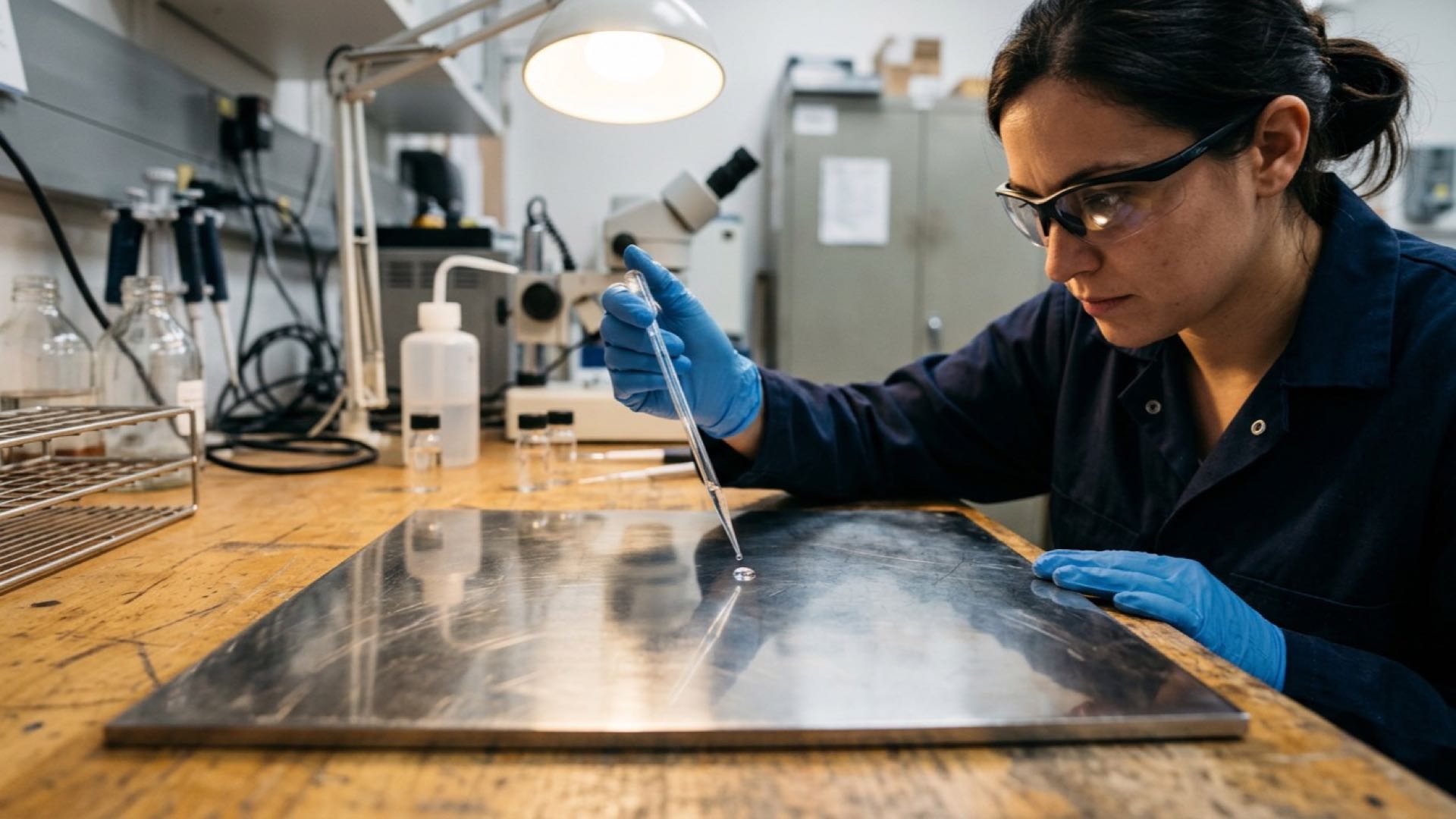
The ferroxyl test is a chemical test that indicates whether free iron is present on the surface. When the test solution contacts free iron, a distinct colour change appears. The test gives a quick early indication of how clean the surface is.
The result should be interpreted according to the applied standard and the project specification. The test alone does not give a definitive decision on the quality of the passivation.
The Copper Sulphate Test
The copper sulphate test is a method that can indicate the presence of free iron and the susceptibility of the surface to corrosion. The test solution is applied to the surface and any copper deposition is observed. Copper deposition may point to an area that is not adequately protected.
The test procedure, solution preparation, dwell time and interpretation criteria must follow the standard. Safety precautions apply at every stage.
Humidity, Condensation and Corrosion Tests
In some applications, the behaviour of the surface under humidity and condensation is also assessed. Tests of this kind show the corrosion resistance of the surface in an environment closer to real operating conditions. The test duration and conditions are set by the standard.
These tests can take longer and may require special equipment. Their scope should therefore be chosen according to how critical the application is.
Roughness and Surface Measurement
Surface roughness after passivation can also be checked. Roughness affects how readily soil adheres and how easily the surface can be cleaned. The measurement is made with a surface roughness instrument, and the values are compared with the limits in the project specification.
The roughness limit should be set according to the material and the application. No fixed value is given in this article.
Test Selection and Compliance with Standards
Which tests are applied is determined by the material grade, the passivation method, the area of use and the relevant standard. The choice of tests should be written in the project quality plan. A test that does not follow the standard cannot support an acceptance decision.
The order of the tests should also be planned. Visual inspection is usually the first step, with the other tests following.
Rinsing and Drying After Testing
If the solutions used in testing remain on the surface, they can cause contamination or corrosion in later use. After testing, the surface should be rinsed and dried properly. The quality of the rinse water should also be checked.
Drying should be carried out without creating new contamination.
Records and Reporting
Each test should be recorded with its date, the surface description, the method used, the solution used, the result and the person who interpreted it. The test report should be added to the project handover file together with the records of the passivation process.
The records should be kept for use in later audits and problem analysis.
Conclusion
Surface inspection after passivation is carried out through visual examination, chemical tests such as the ferroxyl and copper sulphate tests and, where needed, measurement of humidity behaviour and roughness. When the choice of tests follows the material, the application and the standard, the inspection is both reliable and traceable.
SS Proje supports the application of quality control in stainless steel fabrication and surface treatment. The test set, acceptance criteria and roughness limits should be set for each project by the standard and the project specification.