



How to Reduce Welding Time and Material Waste in Tank Production
- Blog
- How to Reduce Welding Time and Material Waste in Tank Production
How to Reduce Welding Time and Material Waste in Tank Production
Table of Contents
- Why Welding and Material Should Be Considered Together
- Cutting Optimisation in Material Planning
- Plate Size and Part Layout
- Choosing the Welding Process
- Edge Preparation and Groove Angle
- Welding Sequence and Distortion Control
- The Cost of Rework
- Welder Competence and Procedure
- Monitoring and Records
- Conclusion
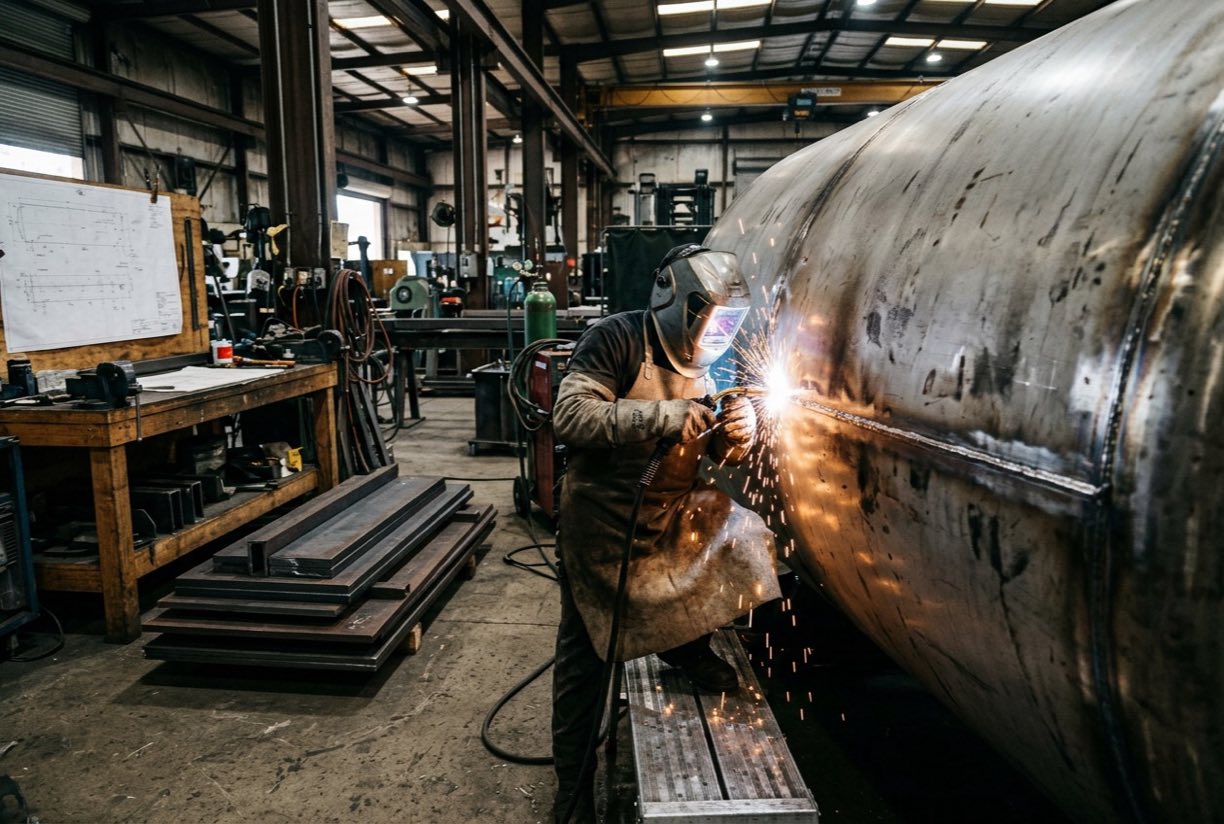
In tank fabrication, welding time and material loss are two linked cost items. Incorrect cutting, unnecessary seams and repeated welding waste both time and material. Efficiency is therefore achieved through planning before fabrication begins.
Why Welding and Material Should Be Considered Together
Material choice, cutting plan and welding process influence each other. Welding a thick plate takes longer and needs more preparation. A thin plate is prone to distortion and needs more careful control.
For this reason, cost analysis should look not only at the plate price but also at total labour and the risk of rework.
Cutting Optimisation in Material Planning
The cutting plan should be prepared to produce the parts from the plate with the least scrap. The layout of the parts can be done with software or by an experienced planner. The direction and size of each part should be chosen with the rolling direction of the plate in mind.
The plan should also leave room for dimensions that change during production. Last-minute changes cause both scrap and lost time.
Plate Size and Part Layout
When choosing plate sizes for the tank shell and heads, the aim should be a layout that creates as few joint seams as possible. Fewer seams reduce both welding time and inspection load.
The position of the seams matters too. In areas of high stress or intensive inspection, seam location must comply with the design specification.
Choosing the Welding Process
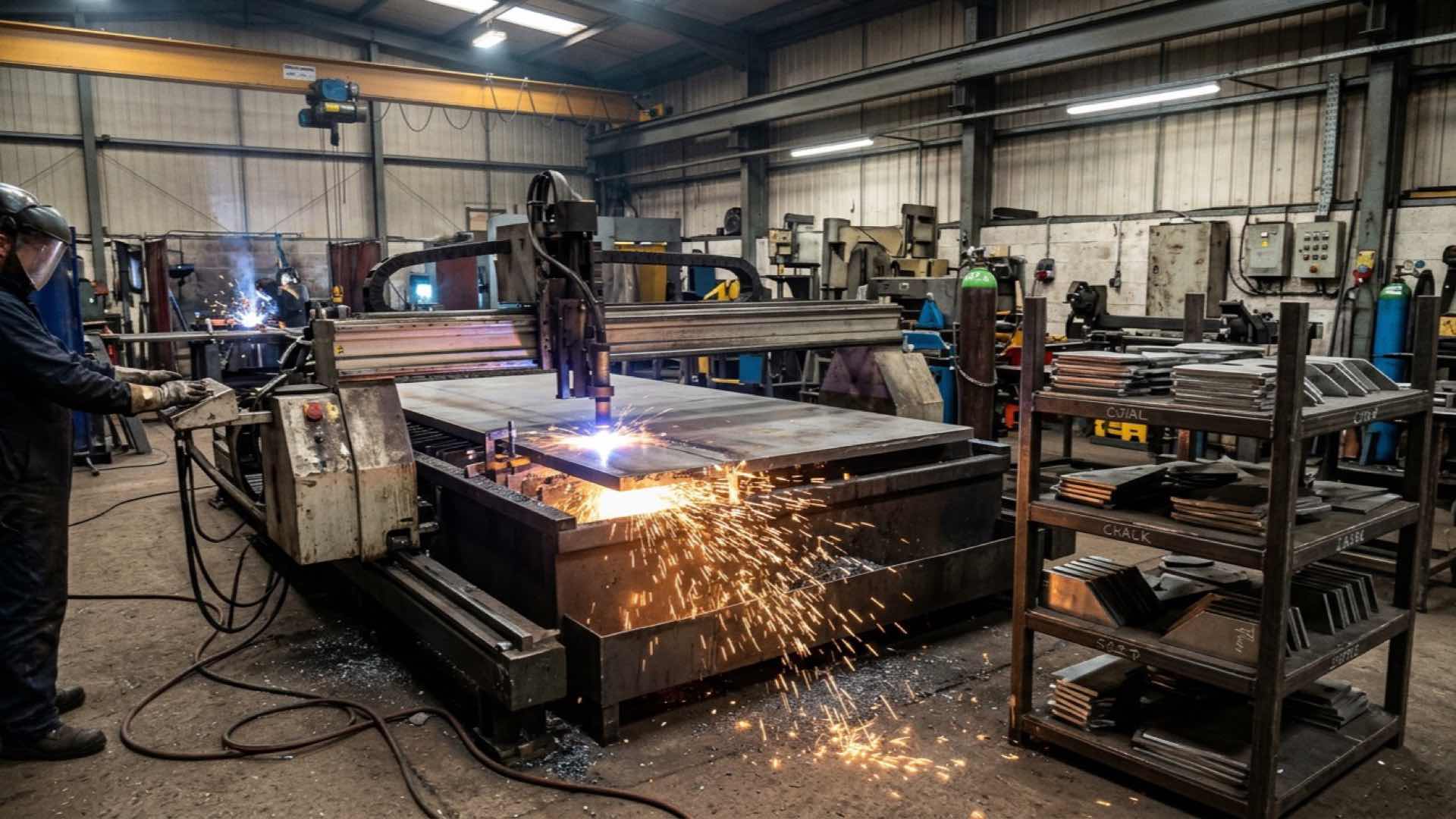
The welding process is selected according to the material type, plate thickness, position and quality expectations. The efficiency of a process is measured by its deposition rate and the amount of filler used. A high-efficiency process, applied correctly, can shorten welding time noticeably.
When changing the process, quality requirements and welder competence should be reassessed. Production should not start with a new process until its procedure has been approved.
Edge Preparation and Groove Angle
Edge preparation directly affects the amount of weld filler. An unnecessarily large groove angle means more filler material and longer welding time. A narrow but adequate groove angle reduces the filler quantity.
The groove angle value should be set by the welding procedure and the design specification. The quality of the cut also matters: uneven cut faces add cleaning and correction time.
Welding Sequence and Distortion Control
The welding sequence should keep the heat input evenly distributed. A symmetrical and balanced sequence reduces distortion. Correcting distortion can cost both time and material.
Clamps and supports should hold the part in position during welding. The location of clamping points should also be planned to reduce residues after welding.
The Cost of Rework
Grinding, re-welding and re-inspection caused by faulty welds raise the total cost considerably. These costs often come from gaps in the initial planning.
When the rework rate is recorded, it becomes visible which part or which welder is causing problems. This data should be used when planning future projects.
Welder Competence and Procedure
Welder competence matters for both quality and efficiency. A competent welder makes fewer errors and controls the amount of filler better. Welder qualification records must be kept current.
The welding procedure should be written to suit actual practice on site, and welders should know it. Deviations from the procedure should be recorded.
Monitoring and Records
Welding time, filler consumption, scrap quantity and rework rate should be recorded regularly. This data is needed to measure the effect of efficiency improvements.
Records can be reviewed weekly or per work order. When deviations are caught quickly, correcting them is far easier.
Conclusion
Reducing welding time and material waste in tank fabrication is achieved through cutting planning, plate layout, a suitable welding process, correct edge preparation, distortion control and welder competence. When these steps are applied together, both time and material use become more efficient.
SS Proje supports planning and quality control in tank fabrication. The welding procedure, acceptance criteria and cutting plan should be set for each project according to the design specification and the judgement of a qualified engineer.