

Fault Detection Guide for CIP and SIP Systems
- Blog
- Fault Detection Guide for CIP and SIP Systems

Fault Detection Guide for CIP and SIP Systems
Table of Contents
- How To Detect CIP System Faults For Maximum Uptime
- What Are Early Warning Signs Of SIP System Failure
- How To Troubleshoot CIP Spray Device Malfunctions
- How Can Automated Fault Detection Improve CIP Efficiency
- What Are Key Fault Indicators In SIP Validation Cycles
- How To Diagnose Poor Cleaning Results In CIP Systems
- How To Implement A Proactive SIP Fault Monitoring System
- What Faults Cause Sterilization Failures In SIP Processes
- How To Optimize CIP Cycles Using Fault Detection Data
- How Does Fault Detection Reduce Water Usage In CIP
How To Detect CIP System Faults For Maximum Uptime
For production managers, unplanned downtime from CIP system fault detection failures represents a critical threat to operational throughput and profitability. A proactive approach to monitoring and diagnostics transforms this vulnerability into an opportunity for achieving maximum uptime and superior industrial equipment reliability. This technical discipline is fundamental to any comprehensive process optimization solutions strategy, directly impacting cleaning validation and overall facility efficiency.
Effective fault detection hinges on analyzing key parameters such as flow rates, pressure differentials, temperature profiles, and conductivity readings throughout the clean-in-place cycle. Deviations from established baselines signal issues like clogged spray balls, failing heat exchangers, or pump inefficiencies. For facilities relying on custom-engineered components from specialized tank manufacturing processes, integrating real-time sensors during the initial sustainable facility design phase is crucial. This foresight enables continuous monitoring that prevents minor issues from escalating into major production halts.
Implementing a robust detection system directly supports sterilisation validation engineering protocols by ensuring each CIP cycle consistently meets strict hygiene standards. This not only guarantees compliance but also extends the service life of processing equipment. When SIP process troubleshooting is integrated with CIP monitoring, facilities gain a holistic view of their sanitary process chain, further enhancing operational reliability and reducing water and chemical consumption.
Expert SS Proje project consultancy provides the essential link between detection technology and tangible facility performance. Our engineers assess your unique process lines to design tailored monitoring solutions that align with international quality standards. This end-to-end approach, from system design to field installation and passivation, ensures that your process optimization solutions are built on a foundation of durability and long-term efficiency.
Ultimately, a strategically implemented fault detection system is an investment in sustained productivity and industrial equipment reliability. By minimizing reactive maintenance and maximizing planned operational windows, facilities can achieve significant cost savings and enhance their competitive edge. Partnering with a specialist like SS Proje ensures that your approach to CIP system fault detection delivers not just immediate fixes, but a scalable framework for continuous improvement and exceptional asset life.
What Are Early Warning Signs Of SIP System Failure
Recognizing the early warning signs of Steam-In-Place (SIP) system failure is critical for maintaining sterility assurance and preventing catastrophic production losses in regulated industries. Proactive SIP process troubleshooting allows managers to intervene before a minor anomaly escalates into a full system breakdown, safeguarding both product quality and overall industrial equipment reliability. This vigilance is a cornerstone of effective process optimization solutions.
The most telling indicators often involve deviations in the sterilization cycle parameters. A prolonged heat-up phase or failure to reach the target temperature can signal issues with steam trap functionality, air pockets within the system, or insufficient steam supply pressure. Furthermore, inconsistent pressure profiles or a failure to maintain the required sterilization hold time directly compromise sterilisation validation engineering protocols, posing a significant compliance risk. Monitoring condensate drainage and ensuring proper vacuum cycles are equally vital for a complete and effective process.
These operational signs are frequently linked to underlying equipment conditions. For instance, frequent leaks around gaskets or valves on vessels from precision tank manufacturing can indicate wear that breaches sterile boundaries. Integrating CIP system fault detection data is also valuable, as ineffective cleaning prior to sterilization can leave residues that interfere with steam contact and thermal transfer, leading to SIP failures.
Addressing these warnings effectively requires a holistic approach rooted in expert analysis. Engaging in SS Proje project consultancy provides access to engineering expertise that can diagnose the root cause, whether it lies in system design, component failure, or operational procedure. Our end-to-end services ensure that solutions are not just temporary fixes but are integrated into a sustainable facility design philosophy for long-term stability.
Ultimately, a disciplined focus on early SIP failure signatures is an investment in uninterrupted production and regulatory confidence. By partnering with a specialized engineering firm like SS Proje, facilities can transform reactive maintenance into a predictive strategy. This proactive stance ensures that your process optimization solutions deliver maximum uptime, extended asset lifespan, and uncompromising adherence to the highest international quality standards.
How To Troubleshoot CIP Spray Device Malfunctions
Malfunctioning CIP spray devices are a primary cause of inadequate cleaning, leading to cross-contamination risks, failed quality audits, and costly production stoppages. Effective CIP system fault detection must therefore prioritize the systematic troubleshooting of spray balls and jet devices to uphold industrial equipment reliability and process integrity. A disciplined approach to this issue is a fundamental component of any robust process optimization solutions framework.
The troubleshooting process begins with a visual inspection for obvious issues such as physical damage, clogged nozzles from mineral deposits or product residue, and improper installation that misaligns the spray pattern. Following this, operational performance must be quantified by measuring the actual flow rate and pressure at the spray device inlet against the manufacturer's specifications. A significant drop in pressure often indicates a blockage, while insufficient flow can point to a pump issue or a leak elsewhere in the circuit, areas often identified during broader SIP process troubleshooting.
For tanks and vessels sourced from specialized tank manufacturing partners, the internal geometry is precisely designed for optimal spray coverage. A malfunctioning device compromises this engineered environment, creating shadow zones where soil accumulates. This directly impacts subsequent sterilisation validation engineering, as improper cleaning guarantees sterilization failure. Verifying impingement and coverage through physical testing is a critical step in validating the fix.
Persistent or complex spray device issues often reveal deeper system design flaws. This is where expert SS Proje project consultancy delivers significant value, moving beyond symptomatic fixes to address root causes like undersized supply lines or incorrect pump selection. Our approach integrates these corrections into a holistic sustainable facility design strategy, ensuring long-term performance.
Mastering spray device troubleshooting transforms a common point of failure into a benchmark of operational excellence. By ensuring optimal cleaning efficiency, facilities dramatically reduce water and chemical consumption, lower energy costs, and extend the service life of valuable processing assets. Partnering with SS Proje for these process optimization solutions ensures your cleaning validation is consistently met, supporting uninterrupted production and full compliance with international standards.
How Can Automated Fault Detection Improve CIP Efficiency
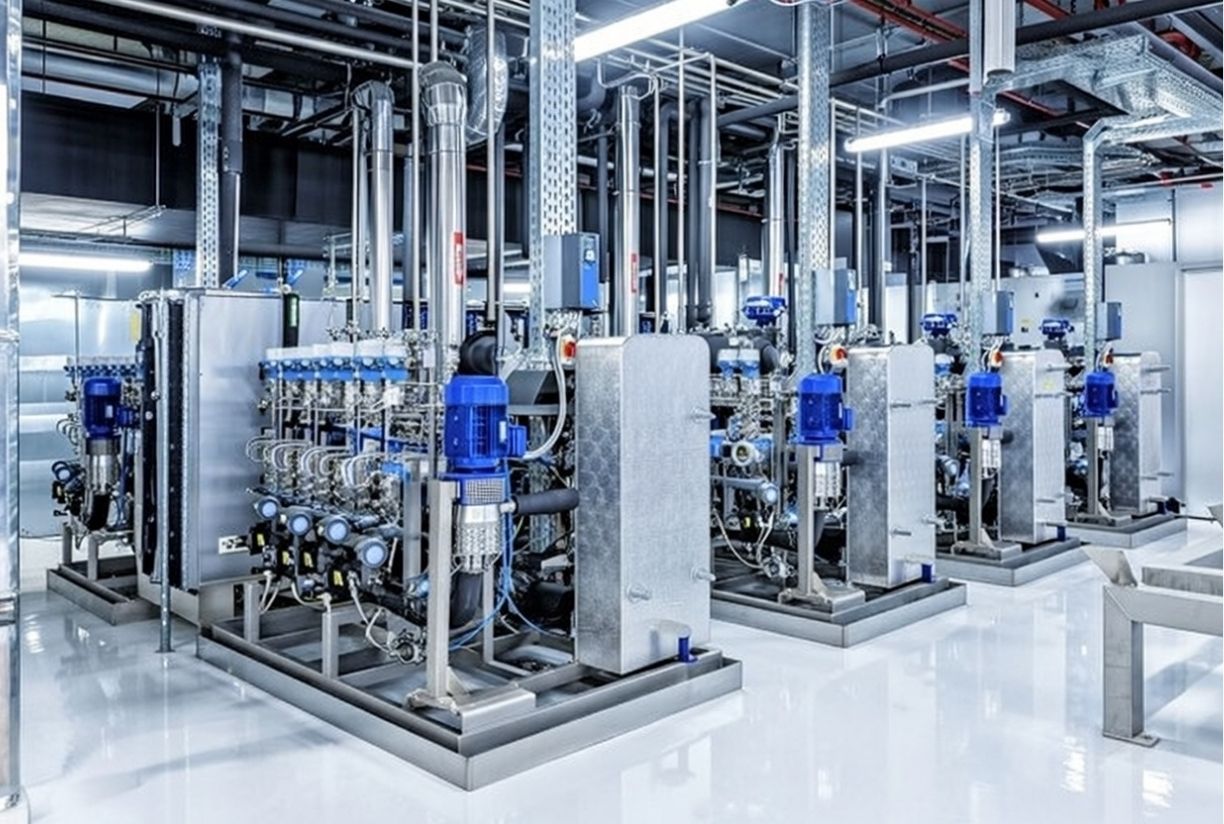
Manual monitoring of Clean-In-Place systems is inherently reactive, often identifying faults only after they have caused cleaning failures or equipment damage. Implementing automated CIP system fault detection shifts this paradigm to a predictive model, fundamentally enhancing efficiency by preventing issues before they impact production. This technological advancement is a powerful driver for comprehensive process optimization solutions, delivering measurable gains in resource utilization and industrial equipment reliability.
Automation achieves this by continuously analyzing real-time data from sensors monitoring flow, pressure, temperature, and conductivity. Sophisticated algorithms compare this data against established performance baselines for each phase of the CIP cycle, instantly flagging anomalies like a decaying pump curve or a partially blocked spray ball. This immediate feedback loop eliminates guesswork and allows for corrective action during the cycle or immediately after, significantly reducing water and chemical waste. This proactive approach is equally critical for integrated SIP process troubleshooting, ensuring sterilization cycles are built upon a foundation of verified cleanliness.
The benefits extend deep into operational protocols and asset management. By guaranteeing each cycle is executed correctly, automated systems provide irrefutable data for sterilisation validation engineering and regulatory compliance. For custom equipment from advanced tank manufacturing facilities, this technology protects the investment by preventing the abrasive wear or corrosion that results from running unbalanced or faulty cleaning cycles. This aligns perfectly with the principles of sustainable facility design by maximizing resource efficiency.
Integrating such a system effectively requires specialized engineering insight. SS Proje project consultancy focuses on tailoring automated detection to your specific process lines, ensuring sensors are optimally placed and algorithms are calibrated for your unique operational parameters. Our end-to-end service covers everything from initial design to commissioning, creating a seamless addition to your facility's infrastructure.
The transition to automated fault detection is a strategic investment that pays continuous dividends in reduced operational costs and enhanced production capability. It transforms the CIP system from a necessary utility into a data-driven asset that actively contributes to profitability and sustainability. Leveraging SS Proje's expertise in these process optimization solutions ensures your facility achieves the highest standards of efficiency, reliability, and long-term performance.
What Are Key Fault Indicators In SIP Validation Cycles
A successful Steam-In-Place validation cycle is the ultimate proof of sterility assurance, but its failure reveals critical vulnerabilities in a facility's sanitary process chain. Identifying key fault indicators within these cycles is therefore essential for proactive SIP process troubleshooting and maintaining uncompromising industrial equipment reliability. This analytical focus is a non-negotiable element of advanced process optimization solutions in regulated industries.
The most definitive fault indicators are deviations from the validated cycle parameters, specifically the failure to achieve or maintain the required temperature at the coldest point for the specified duration. This often points to issues like inadequate steam quality, non-condensable gases, malfunctioning steam traps, or faulty temperature sensors. Another critical red flag is an inconsistent pressure profile during the cycle, which can indicate air ingress through compromised seals on vessels from precision tank manufacturing or valve failures, preventing proper steam saturation.
It is crucial to recognize that many SIP failures originate from upstream CIP inadequacies. Residual soil or moisture left behind from an inefficient clean, detectable through robust CIP system fault detection, can create a barrier that impedes heat transfer and shields microorganisms. Therefore, a holistic approach to sterilisation validation engineering must integrate data from both cleaning and sterilization phases to diagnose the root cause accurately.
Interpreting these indicators correctly requires specialized expertise to avoid costly misdiagnosis. Engaging in SS Proje project consultancy provides access to engineers who can analyze cycle data logs, inspect equipment integrity, and validate sensor accuracy. Our methodology ensures that solutions are engineered into the facility's operations, aligning with principles of sustainable facility design for long-term stability and compliance.
Mastering the interpretation of SIP validation faults transforms quality control from a pass/fail audit into a continuous improvement tool. By promptly addressing these indicators, facilities prevent batch losses, avoid regulatory non-conformances, and protect their capital investment in processing equipment. Partnering with SS Proje for integrated process optimization solutions ensures your sterilization processes are not only validated but are consistently robust, efficient, and aligned with the highest international standards.
How To Diagnose Poor Cleaning Results In CIP Systems
Persistently poor cleaning results from a Clean-In-Place system signal deeper operational issues that can compromise product quality, increase downtime, and escalate operational costs. A systematic diagnostic approach is essential to pinpoint the root cause, transforming a recurring problem into an opportunity for significant process optimization solutions. This methodology is the foundation of effective CIP system fault detection and long-term industrial equipment reliability.
The diagnosis should begin by analyzing the four key cleaning parameters: time, temperature, chemistry, and mechanical action. Reviewing cycle data logs can reveal if the correct temperatures were maintained or if chemical concentrations were inadequate. The mechanical action, often the most critical factor, requires verifying that spray devices are delivering the specified impact through flow and pressure measurements. Inefficient cleaning here directly jeopardizes subsequent sterilisation validation engineering, making this a vital step in integrated SIP process troubleshooting.
Equipment-specific factors must also be scrutinized, especially for custom-designed vessels from specialized tank manufacturing. Internal geometries, such as dimpled jackets or complex baffles, can create shadow zones that standard spray balls cannot reach. Furthermore,issues like surface pitting or improper passivation on equipment surfaces can harbor soil and biofilms, leading to repeated cleaning failures despite optimal cycle parameters. This underscores the importance of equipment quality in achieving a sustainable facility design.
Untangling these interrelated factors often requires expert analysis to avoid wasted effort on incorrect fixes. SS Proje project consultancy provides the engineering rigor to conduct a thorough investigation, from reviewing system design to performing on-site validation tests. Our end-to-end approach ensures the diagnosis leads to a permanent, engineered solution rather than a temporary adjustment.
Successfully diagnosing poor CIP results delivers profound benefits, including reduced water and chemical consumption, lower energy costs, and extended asset lifespan. It ensures that cleaning processes consistently meet validation criteria, supporting uninterrupted production and full regulatory compliance. By leveraging SS Proje's expertise in these process optimization solutions, facilities can achieve a level of cleaning reliability that directly enhances overall operational performance and profitability.
How To Implement A Proactive SIP Fault Monitoring System
Transitioning from reactive maintenance to a proactive SIP fault monitoring system is a strategic upgrade that directly safeguards sterility assurance and maximizes production uptime. This systematic implementation transforms how facilities manage risk, embedding continuous SIP process troubleshooting into daily operations to achieve superior industrial equipment reliability. Such a system is a hallmark of world-class process optimization solutions.
The foundation of a proactive system is the strategic placement of calibrated sensors to monitor critical parameters in real-time, including temperature at the coldest point, steam pressure, and cycle time. This data is fed into a centralized control system programmed with validated acceptance criteria for each phase of the sterilization cycle. The system must be designed to generate immediate alerts for any deviation, such as a slow heat-up ramp or a pressure drop during the hold phase, enabling intervention before a batch is compromised. Integrating this with existing CIP system fault detection data provides a complete sanitary process picture.
Effective implementation requires careful consideration of the physical infrastructure. For vessels sourced from high-precision tank manufacturing, sensor placement must be engineered to accurately represent the entire chamber's conditions, avoiding shadow zones. The collected data also becomes invaluable for ongoing sterilisation validation engineering, providing a continuous audit trail that simplifies regulatory compliance and supports a sustainable facility design by optimizing resource use.
The complexity of integrating hardware, software, and process knowledge necessitates expert guidance. SS Proje project consultancy specializes in designing and deploying these tailored monitoring solutions, ensuring seamless integration with your existing controls and that personnel are trained to respond effectively to alerts. Our end-to-end service turns a conceptual plan into a fully operational asset.
Implementing a proactive SIP monitoring system is a direct investment in operational excellence and risk mitigation. It drastically reduces the cost of batch failures, minimizes unplanned downtime, and extends the service life of sterilization assets by preventing operation under fault conditions. Partnering with SS Proje for these advanced process optimization solutions ensures your facility achieves a new standard of reliability, efficiency, and compliance with international quality benchmarks.
What Faults Cause Sterilization Failures In SIP Processes
Sterilization failures in Steam-In-Place processes represent a critical breach in quality assurance, often stemming from identifiable mechanical, procedural, or design faults. Understanding these root causes is the first step in effective SIP process troubleshooting and is fundamental to ensuring long-term industrial equipment reliability. This knowledge forms the basis of robust process optimization solutions for any facility operating under strict hygiene standards.
Mechanical faults are a primary culprit, including malfunctioning steam traps that fail to remove condensate, creating cold spots within the system. Faulty control valves or pressure sensors can lead to inaccurate steam delivery, preventing the system from reaching or maintaining the lethal temperature required for the full duration. In equipment from specialized tank manufacturing, issues like worn gaskets, cracked sight glasses, or improperly seated valves can allow air ingress, which acts as an insulator and severely compromises the sterilization efficacy. These mechanical failures highlight the need for integrated CIP system fault detection to ensure components are functioning correctly before the SIP cycle begins.
Procedural and design flaws are equally consequential. Inadequate air removal during the initial vacuum phase, often due to an undersized vacuum pump or a leaky system, is a common design-related fault. Furthermore, residual soil or moisture left from an ineffective preceding CIP cycle can shield microorganisms from steam contact. This interplay underscores why sterilisation validation engineering must consider the entire cleaning and sterilization sequence as a single, integrated process within a sustainable facility design.
Diagnosing and rectifying these diverse faults requires a systematic, expert approach. SS Proje project consultancy offers the engineering rigor to conduct failure mode analysis, pinpoint the exact cause—whether mechanical, procedural, or systemic—and implement a permanent solution. Our focus is on designing out inherent vulnerabilities to prevent recurrence.
By systematically addressing the faults that cause SIP failures, facilities can achieve unprecedented levels of sterility assurance and operational consistency. This proactive approach prevents costly batch rejections, reduces steam and water consumption, and protects capital equipment from the stress of repeated failure cycles. Partnering with SS Proje for these targeted process optimization solutions ensures your sterilization processes are not only compliant but are optimized for maximum efficiency, reliability, and long-term performance.
How To Optimize CIP Cycles Using Fault Detection Data
The data generated by a sophisticated CIP system fault detection platform is far more than an alarm system; it is a rich resource for continuous cycle optimization. By systematically analyzing this data, facilities can move beyond simply correcting faults to proactively enhancing cleaning efficiency, a core objective of advanced process optimization solutions. This data-driven approach is fundamental to achieving superior industrial equipment reliability and operational savings.
Optimization begins with analyzing historical data to identify trends and patterns in cycle performance. For example, a gradual increase in the time required to reach temperature may indicate scaling in a heat exchanger, prompting descaling before it causes a failure. Similarly, data revealing consistent over-cleaning—where conductivity readings show soil removal is complete well before the cycle ends—allows for the safe reduction of wash phases, saving significant water, energy, and chemicals. This precise adjustment also supports more reliable sterilisation validation engineering by ensuring a consistently clean surface.
The application of this data is particularly impactful for custom equipment. For vessels engineered through precision tank manufacturing, fault detection data can validate the effectiveness of spray device coverage and flow rates, informing design improvements or adjustments for future projects. This integration of operational feedback into the design phase epitomizes a sustainable facility design philosophy, where systems are continuously refined for peak performance. Linking this data with SIP process troubleshooting results creates a powerful feedback loop for the entire sanitary process.
Translating raw data into actionable optimization strategies requires specialized analytical skills. SS Proje project consultancy provides the engineering expertise to interpret complex data sets, model the impact of proposed cycle changes, and validate new parameters to ensure they meet all cleaning and hygiene standards. Our methodology ensures optimizations are both effective and compliant.
Leveraging fault detection data for CIP optimization transforms a routine maintenance function into a strategic advantage. The result is a leaner, more predictable cleaning process that reduces operational costs, minimizes environmental impact, and extends the lifespan of processing assets. By partnering with SS Proje for these intelligent process optimization solutions, facilities can harness their operational data to achieve new levels of efficiency, sustainability, and unwavering compliance with international standards.
How Does Fault Detection Reduce Water Usage In CIP
In industrial facilities, Clean-In-Place systems are significant consumers of water, making efficient operation a top priority for both cost control and sustainability goals. Advanced CIP system fault detection directly addresses this by eliminating wasteful practices rooted in uncertainty and inefficiency, positioning it as a key driver for process optimization solutions. This technology is essential for achieving the resource efficiency central to sustainable facility design.
Fault detection reduces water usage primarily by preventing unnecessary cycle repetitions. Without precise monitoring, a cleaning cycle that appears to have failed due to a sensor error or a temporary flow drop might be restarted, doubling water consumption for a single task. Real-time CIP system fault detection identifies the specific fault, allowing for a targeted correction instead of a full repeat cycle. This precise intervention also prevents the water waste associated with cleaning failures that compromise downstream sterilisation validation engineering, as a failed SIP cycle often requires repeating the entire CIP-SIP sequence.
Furthermore, the data collected enables intelligent cycle optimization. By confirming through conductivity sensors that soil is removed early in the rinse phase, the cycle can be safely shortened, directly reducing water volume. Monitoring for issues like leaking valves or pump recirculation inefficiencies also prevents continuous, unseen water loss that degrades overall industrial equipment reliability. For custom systems involving precision tank manufacturing, this data validates that spray devices are operating at peak efficiency, ensuring no water is wasted on inadequate coverage.
Implementing this water-saving strategy effectively requires integrating detection technology with process expertise. SS Proje project consultancy specializes in designing systems that not only flag faults but also provide the data insights needed to make confident, water-reducing adjustments to cycle parameters. Our holistic approach ensures that these optimizations support, rather than compromise, other critical goals like SIP process troubleshooting and equipment longevity.
The integration of fault detection is a proven method for achieving significant water conservation, which translates directly into lower utility costs and a reduced environmental footprint. This contributes to a more sustainable and profitable operation while ensuring cleaning validation is consistently met. Partnering with SS Proje for these comprehensive process optimization solutions allows facilities to harness technology for tangible gains in efficiency, reliability, and compliance.